
The case for buying Canadian artisan food is real and holds up beyond the flag-waving: shorter supply chains, more transparent production, and ingredients made to taste rather than to survive six months on a supermarket shelf. Here's what that actually means in practice — and how to tell the genuine article from the label-slapping.
Something changed in Canadian grocery aisles in late 2025 and early 2026. Domestic wine sales surged across Quebec and Ontario through late 2025 and into 2026, according to provincial liquor board reports. Local producers who'd spent years fighting for shelf space found themselves suddenly in demand. The "Buy Canadian" movement went from a background sentiment to something with real commercial teeth — and it's reshaping not just what Canadians buy, but how they think about food and where it comes from.
This is worth paying attention to, and not just for political reasons. The case for buying Canadian artisan food is stronger than the flag-waving version of the argument suggests, and it holds up even when the geopolitical pressure that accelerated it fades.
Why the Moment Happened Now
Canada has had "buy local" advocates for years — farmers markets, food sovereignty movements, the whole ecosystem of people who were making this argument long before it became mainstream. What changed in 2025-2026 is that a combination of trade tensions, inflation, and a resurgent Canadian identity consciousness pushed the conversation from niche to broadly felt.
Canadians started reading ingredient labels differently. Started asking where things were made. Started choosing Ontario cheese over imported European alternatives or BC wine over California bottles — not always because they were cheaper (they often weren't), but because the choice felt meaningful in a new way.
Consumer surveys from early 2026 consistently show this isn't a passing mood. Canadians are increasingly prioritising food provenance as a decision factor alongside price and convenience. That shift benefits artisan producers disproportionately, because provenance and craft are exactly what artisan food has always led with.
What "Artisan" Actually Means (When It Means Something)
The word artisan has been stretched well past the point of usefulness in food marketing. "Artisan" bread from a national chain, "artisan" cheese with 18 ingredients, "artisan" crackers made in a facility that produces 50,000 units an hour. The label has become almost meaningless without context.
When it means something, artisan production refers to food made in small batches by people who have developed genuine skill in their craft, using methods that prioritise quality over speed, with ingredient lists that reflect what the food actually is rather than what makes it shelf-stable for six months. The common thread is that it takes longer, requires more skill, and produces fewer units — which is why it costs more and why it tastes different.
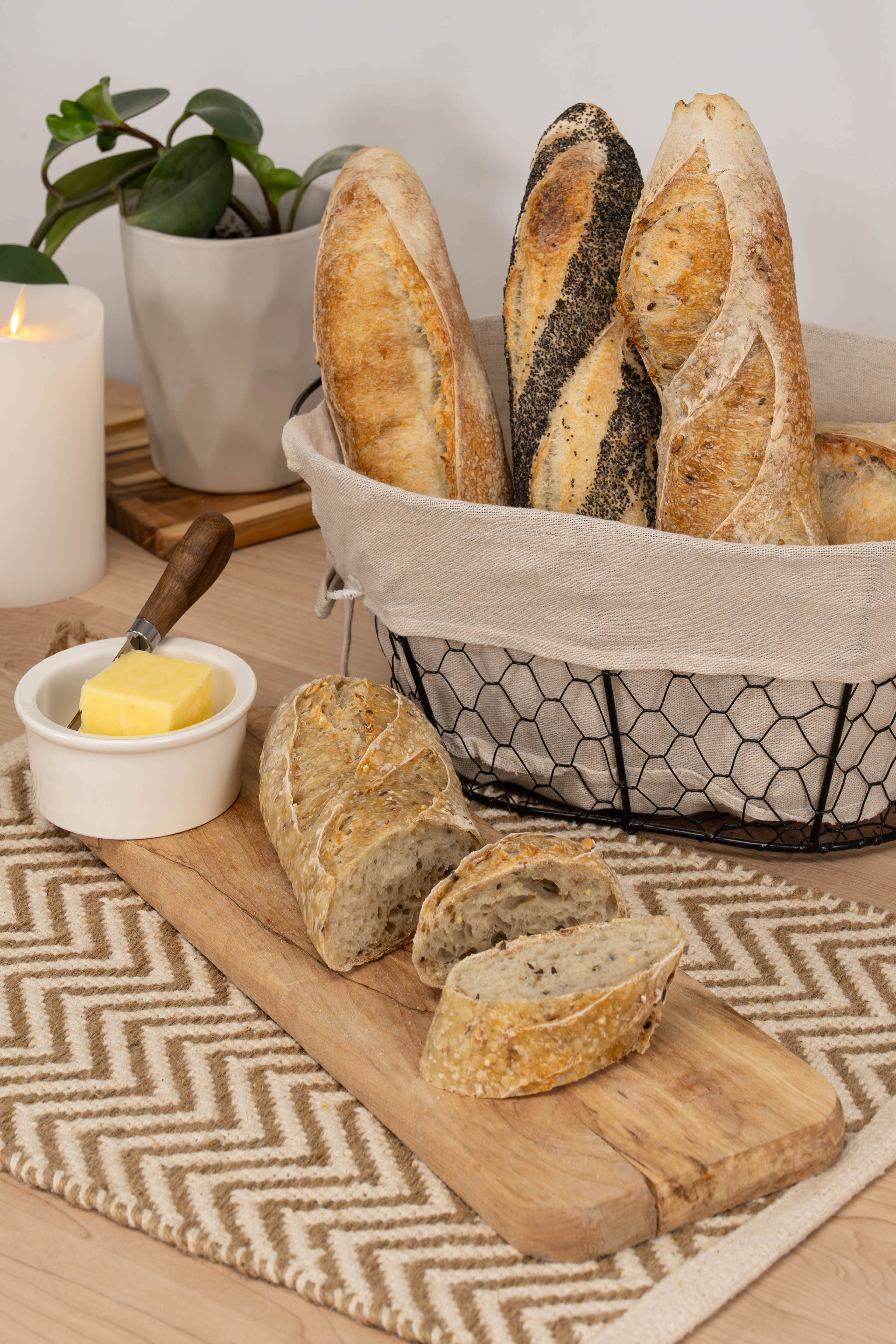
Real artisan bread ferments for 24 to 48 hours — a process that changes the bread's chemistry in ways that fast-made alternatives simply can't replicate. Real artisan cheese ages for months. Real artisan jam uses fruit that's been sourced and prepared with attention rather than blended into an industrial batch. These aren't just aesthetic choices — they're what creates the flavour and texture difference between mass-produced and genuinely craft-made food.
The Access Problem Artisan Food Has Always Had
Here's where the Buy Canadian conversation intersects with a genuine structural problem: most Canadians don't live within easy reach of artisan food producers. Farmers markets, specialty food shops, and serious artisan bakeries are concentrated in urban cores — and even in cities, they're often in neighbourhoods that require effort to get to and carry price points that require disposable income.
The suburban majority of Canadian life — Kanata, Langley, Airdrie, Brossard — has been largely cut off from artisan food access. Not because people there don't care about quality, but because the distribution infrastructure simply hasn't existed. The choice has been supermarket or nothing. (If you're in Ontario specifically, our Ontario Exclusive Box was built exactly with this gap in mind.)
This is one of the things that's genuinely changed in recent years. Direct-to-consumer artisan food has become a viable channel in a way it wasn't five years ago. Producers who previously could only sell through farmers markets or specialty retailers can now ship directly to customers across provinces. The quality doesn't have to be compromised by distribution — if anything, the direct relationship between producer and consumer can improve it, because the feedback loop is tighter.
How to Find Genuine Buy Canadian Artisan Producers
| "Product of Canada" | "Made in Canada" | |
|---|---|---|
| Legal standard | ≥95% of main ingredient must be Canadian | Last substantial transformation done in Canada |
| Ingredient origin | Primarily Canadian by law | May use largely imported ingredients |
| Strength as a quality signal | Stronger — harder to game | Weaker — easier to misuse |
| Does it indicate craft? | No — geography only | No — geography only |
| What else to check | Ingredient list, fermentation time, producer story | Ingredient list, fermentation time, producer story |
The Buy Canadian label on a product doesn't automatically mean what you think it means. "Product of Canada" has specific regulatory meaning (95% of the main ingredient must be Canadian). "Made in Canada" is looser — it can mean assembled here from imported components. And none of it speaks to craft or quality, just geography.
A more useful filter for artisan Canadian food: how transparent is the producer about their process? Can they tell you where their main ingredients come from? Do they have a short ingredient list? Is there a person or a small team you can identify behind the product? Do they have a clear story about what they make and why they make it that way?
These questions filter out the brands that put "Canadian" on the label as a marketing move without the substance to back it up. The producers who answer them clearly are usually the ones worth buying from.
Why Atome Is Part of This Conversation
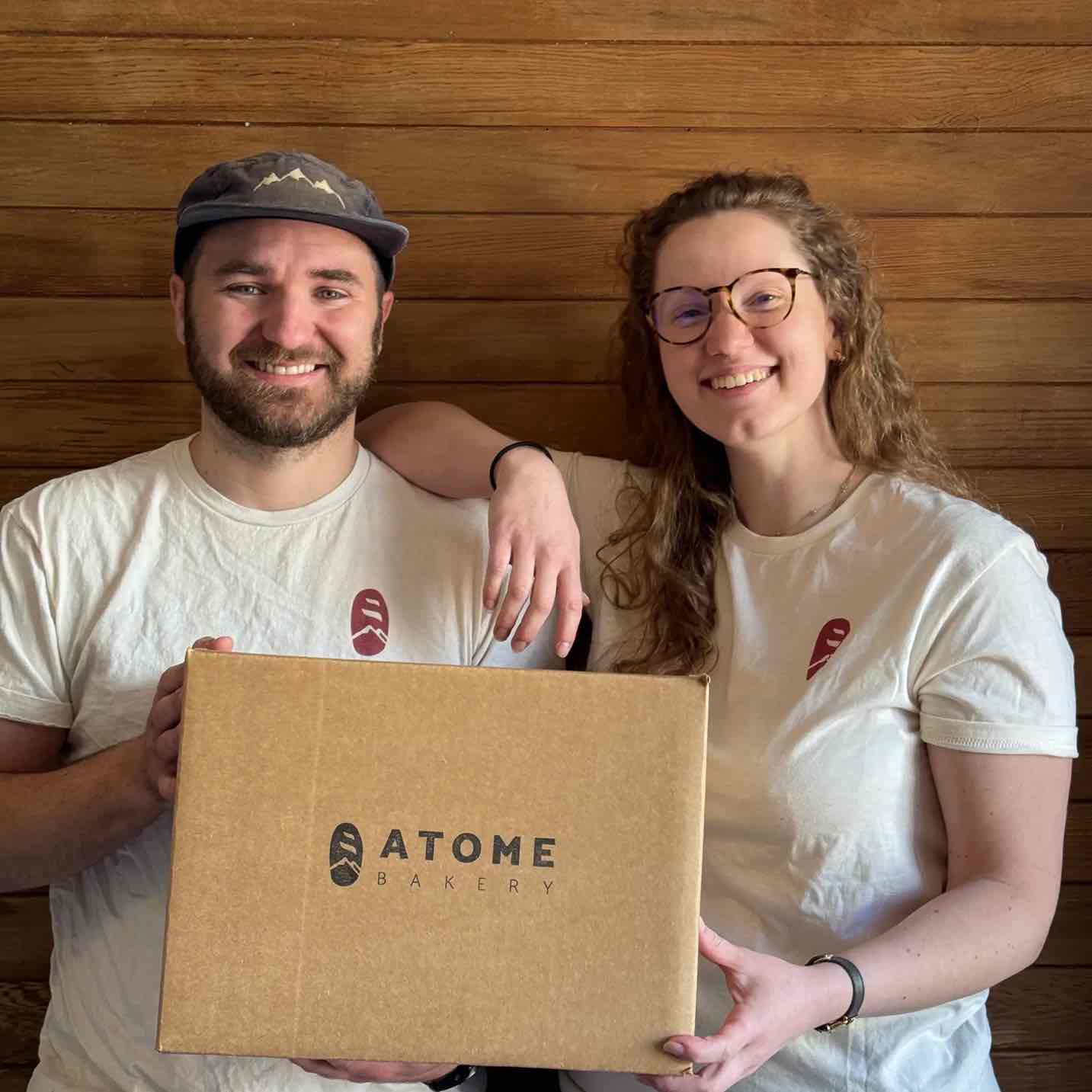
We started Atome because the access problem for good bread in Canada was frustrating to us personally — the full story is here. Vancouver has excellent bakeries — but most of Canada doesn't have easy access to that, and even in Vancouver, "easy access" means scheduling your weekend around a bakery's hours.
What we make is straightforward: long-fermented sourdough breads and pastries, made by our baking team in Vancouver, frozen at peak freshness, and shipped directly to customers across Canada. The ingredient lists are short. The fermentation times are real. The provenance is Vancouver, Canada, full stop. We're BC Food & Beverage 2025 award winners and have shipped 29,000+ boxes to customers from BC to Ontario.
The Buy Canadian movement is giving more Canadians a reason to ask better questions about their food. We think those questions deserve honest answers — and we'd rather compete on quality than on marketing. If you're buying Canadian artisan food this year, we're glad to be part of that consideration.
Frequently Asked Questions
What does "Product of Canada" actually mean on food labels?
Under Canadian labelling regulations, "Product of Canada" means that 98% of the total direct costs of producing or manufacturing the food were incurred in Canada (for meat products) or 95% of the main ingredient must be Canadian (for other foods). "Made in Canada" is a less stringent claim and can include products assembled here from imported components.
Why is artisan Canadian food more expensive than supermarket alternatives?
The cost difference reflects real differences in production: longer fermentation or aging times, smaller batch sizes, more skilled labour, higher-quality ingredients sourced for flavour rather than shelf stability, and less reliance on industrial processes that reduce cost by reducing time. Artisan food is more expensive because it takes more of everything to make it.
How do I find legitimate artisan food producers in Canada?
Start with farmers markets and specialty food retailers in your area. For direct-to-consumer options, look for producers who are transparent about their process — ingredient lists, production methods, sourcing — and who have clear stories about who they are and why they make what they make. Industry awards (like BC Food & Beverage Awards) are also a useful filter for producers who've been independently evaluated.
Is buying Canadian artisan food better for the environment?
Shorter supply chains generally mean lower transportation emissions, and artisan producers often (though not always) source ingredients with more attention to provenance. However, "local" and "sustainable" aren't the same thing, and Canadian production methods vary as widely as any other country's. Provenance is one factor in a more complex picture.
Can I get genuine artisan bread if I don't live near a good bakery?
Increasingly, yes. Direct-to-consumer frozen artisan bread — properly made and frozen at peak freshness, not parbaked — is a genuinely good option for people in areas without easy artisan bakery access. The key is finding a producer who makes it properly: long fermentation, real ingredients, fully baked before freezing.


Leave a comment
This site is protected by hCaptcha and the hCaptcha Privacy Policy and Terms of Service apply.