
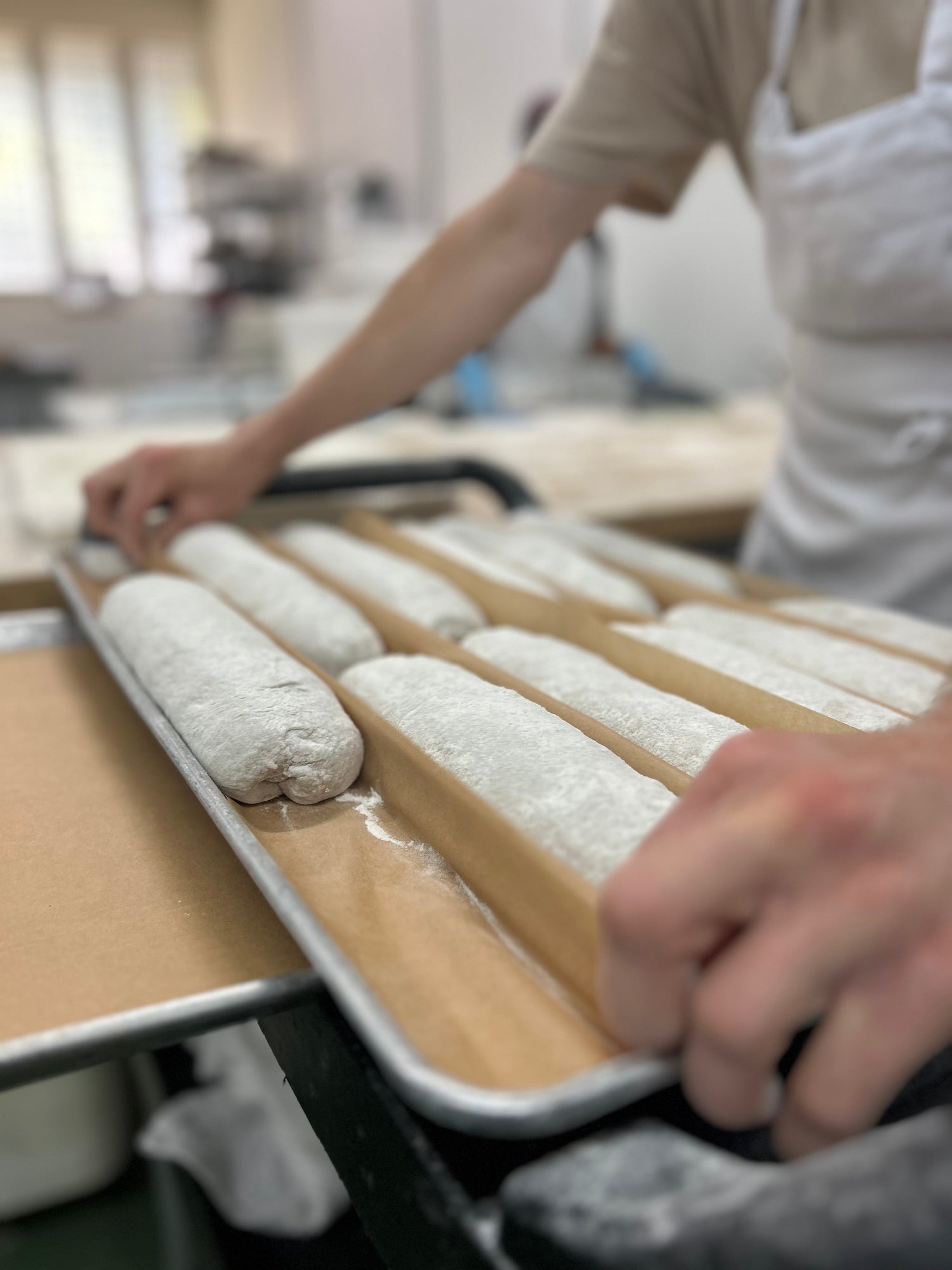
Sourdough fermentation works through two microorganisms — wild yeast and lactic acid bacteria — that transform flour over 24–48 hours, producing the organic acids that create flavour, partially breaking down gluten proteins, and significantly reducing the phytic acid that blocks mineral absorption. Here's what's actually happening inside the dough, and why the timeline matters more than most people realise.
Sourdough has been made the same basic way for thousands of years: mix flour and water, let wild things happen, bake it. For most of that time, bakers understood the results — the tang, the open crumb, the chewy crust — without fully understanding the mechanism. That's changing. Research into sourdough fermentation has been revealing that it does something to wheat fibre that commercial bread production never achieves, with real implications for flavour, texture, and how your body handles the bread.
The short version: sourdough is more interesting than anyone thought. The longer version is worth understanding if you care about what you're eating.
The Players: Wild Yeast and Lactic Acid Bacteria
Sourdough fermentation is run by two types of microorganism that coexist in a starter culture: wild yeast and lactic acid bacteria (LAB). They have a relationship that works out well for both of them and very well for bread.
The wild yeast — typically strains of Saccharomyces cerevisiae or Kazachstania humilis, depending on your starter — consumes sugars in the flour and produces carbon dioxide and a small amount of ethanol. The CO2 is what makes the bread rise. Without yeast, you'd have a dense, flat disc instead of a loaf.
The lactic acid bacteria take a different approach. They produce lactic acid and acetic acid as byproducts of their own fermentation. Lactic acid gives sourdough its mild, dairy-like tang — the kind you taste in yoghurt or mild cheese. Acetic acid is sharper and more vinegary. The ratio of these two acids depends on hydration, temperature, and fermentation time, which is why two sourdoughs made with the same flour can taste completely different.
Yeast and LAB don't compete with each other because they're eating different things. The yeast focuses on simple sugars; the bacteria are better at handling more complex carbohydrates. They divide the flour between them, which is part of why a long fermentation can extract more flavour than a short one — there's more metabolic activity happening across more of the flour's components.
What the New Research Found
Recent food science research has focused on something called arabinoxylans — a type of dietary fibre found in wheat that hasn't received much attention in bread research until recently. It turns out that during sourdough fermentation, enzymes produced by the lactic acid bacteria break down these arabinoxylans in ways that don't happen in commercial yeast-leavened bread.
This matters for a few reasons. First, breaking down arabinoxylans changes the texture of the dough and the finished bread — it affects how water binds in the crumb, which influences chewiness and crumb structure. This is part of the reason real sourdough has a distinct texture that's hard to replicate in faster-made bread.
Second, and more interestingly for digestion: modified arabinoxylans may behave differently in the gut than intact ones. The fermentation process essentially pre-digests part of the fibre, which could affect how the bread is absorbed and how it feeds gut bacteria. This research is still developing — this isn't a claim that sourdough cures anything — but it adds to a growing body of evidence that long fermentation changes bread in ways that go beyond flavour.
| Sourdough Fermentation | Commercial Yeast Bread | |
|---|---|---|
| Microorganisms | Wild yeast + lactic acid bacteria (LAB) | Single-strain commercial yeast only |
| Fermentation time | 24–48 hours | 1–3 hours |
| Acids produced | Lactic acid + acetic acid (flavour + tang) | Minimal — little flavour contribution |
| Phytic acid | Significantly reduced (better mineral absorption) | Largely intact |
| Gluten structure | Partially broken down by proteases | Largely intact |
| Flavour complexity | High — dozens of organic compounds | Low — relies on added flavourings |
| Digestibility | Easier for many people | Standard |
How Sourdough Fermentation Time Shapes Flavour
Commercial bread is typically fermented for a couple of hours using fast-acting commercial yeast. Sourdough done properly takes 24 to 48 hours — sometimes longer for very cold, slow ferments. That time difference isn't arbitrary. It's the difference between a yeast doing its one job (producing CO2 to leaven the dough) and a complex ecosystem of microorganisms working through the flour's full complement of carbohydrates, proteins, and fibres.
Temperature plays a significant role too. A cold, slow ferment — the overnight fridge proof that most sourdough recipes include — slows everything down to the point where acetic acid production becomes more prominent relative to lactic acid. That's why cold-retarded doughs tend to be tangier than room-temperature-fermented ones. A warmer, faster ferment tips the balance toward lactic acid: milder, softer, slightly sweeter.
This is why two bakers using identical flour and the same starter can produce noticeably different loaves. The timeline and temperature aren't just logistics — they're flavour decisions.
What Fermentation Does to Gluten
One of the most common claims about sourdough is that it's easier to digest than regular bread for people who are sensitive to gluten. The science here is more nuanced than the claim suggests, but it's not without basis.
During long fermentation, proteases — enzymes that break down proteins — become active in the dough. Gluten is made of proteins (glutenin and gliadin), and these proteases partially break them down over the course of a long ferment. The gluten is still present in the finished bread, but its structure is partially degraded compared to a quickly-made loaf.
For people with coeliac disease, this makes no difference — even partially degraded gluten is enough to trigger an immune response, and sourdough is not safe for coeliacs unless made with certified gluten-free flour. If you want to go deeper on the gluten question, we've written a full breakdown on what gluten actually does in bread and who should actually avoid it. But for people who experience general wheat sensitivity without coeliac disease, some find sourdough more comfortable than commercially-made bread. The research is inconclusive, but the mechanism is plausible.
What the fermentation definitely does is reduce phytic acid — an antinutrient in wheat bran that binds to minerals like iron, zinc, and calcium and limits their absorption. Sourdough fermentation activates phytase, an enzyme that breaks phytic acid down. Long-fermented sourdough can have significantly lower phytic acid levels than quick-made bread, which means better mineral bioavailability from the same slice.
What This Means When You're Choosing Bread
The fermentation quality of a sourdough loaf is invisible from the outside. A supermarket loaf with "sourdough" on the label might have been fermented for two hours with a minimal amount of starter added for flavour. A proper artisan loaf went through 24 to 48 hours of active fermentation before it ever saw an oven.
The way to tell the difference is the ingredient list (flour, water, salt, starter — nothing else) and the flavour (real sourness and complexity versus a vaguely tangy flavour that doesn't develop or linger). Asking the producer how long their fermentation takes is also entirely reasonable if you can get an answer.
At Atome — BC Food & Beverage 2025 award winner and 29,000+ boxes shipped across Canada — our sourdoughs ferment for 24 to 48 hours before baking. The arabinoxylans are doing their thing, the wild yeast and bacteria are running through the flour's full complexity, and the result is bread that tastes like it was made with actual time and attention — because it was. We freeze it immediately after baking to preserve that quality, so what arrives at your door is the same loaf that came out of the oven, just paused. If you want to experience the difference, our Sourdough Bread Kit is the easiest way to start.
The science of sourdough is catching up to what bakers have known intuitively for millennia: slow fermentation makes better bread. And if you're curious about where that bread fits into the broader Canadian food landscape, our piece on buying Canadian artisan food covers why provenance and craft go hand in hand. Now we're starting to understand exactly why.
Frequently Asked Questions
What makes sourdough different from regular bread chemically?
Regular bread uses commercial yeast for a fast, single-stage fermentation focused on CO2 production. Sourdough uses wild yeast and lactic acid bacteria together, producing a longer fermentation that creates organic acids, partially breaks down gluten proteins, reduces phytic acid, and modifies dietary fibres — all of which affect flavour, texture, and digestibility.
Is sourdough actually healthier than regular bread?
The evidence suggests long-fermented sourdough has real nutritional advantages over quick-made bread: lower phytic acid (better mineral absorption), partially modified gluten structure, and potentially different fibre behaviour in the gut. However, these benefits depend on genuine long fermentation — not all bread labelled sourdough qualifies.
Why does sourdough taste sour?
The sourness comes from lactic acid and acetic acid produced by lactic acid bacteria during fermentation. Lactic acid tastes milder and dairy-like; acetic acid is sharper and more vinegary. The ratio of these two acids — shaped by temperature, hydration, and fermentation time — determines how sour a specific loaf tastes.
Does freezing sourdough affect its probiotic content?
Baking kills the live microorganisms in sourdough — the wild yeast and bacteria don't survive oven temperatures. So there are no live cultures in baked sourdough, frozen or otherwise. The benefits of sourdough come from what the fermentation did to the bread's structure and composition before baking, not from consuming live bacteria.
How long should sourdough ferment for the best results?
Most professional bakers use a total fermentation time of 24 to 48 hours, including a cold overnight proof. Shorter ferments (under 12 hours) produce less flavour complexity and less gluten modification. Very long ferments (over 72 hours) risk over-fermentation, which weakens gluten structure and produces an overly sour, dense loaf.


Leave a comment
This site is protected by hCaptcha and the hCaptcha Privacy Policy and Terms of Service apply.