
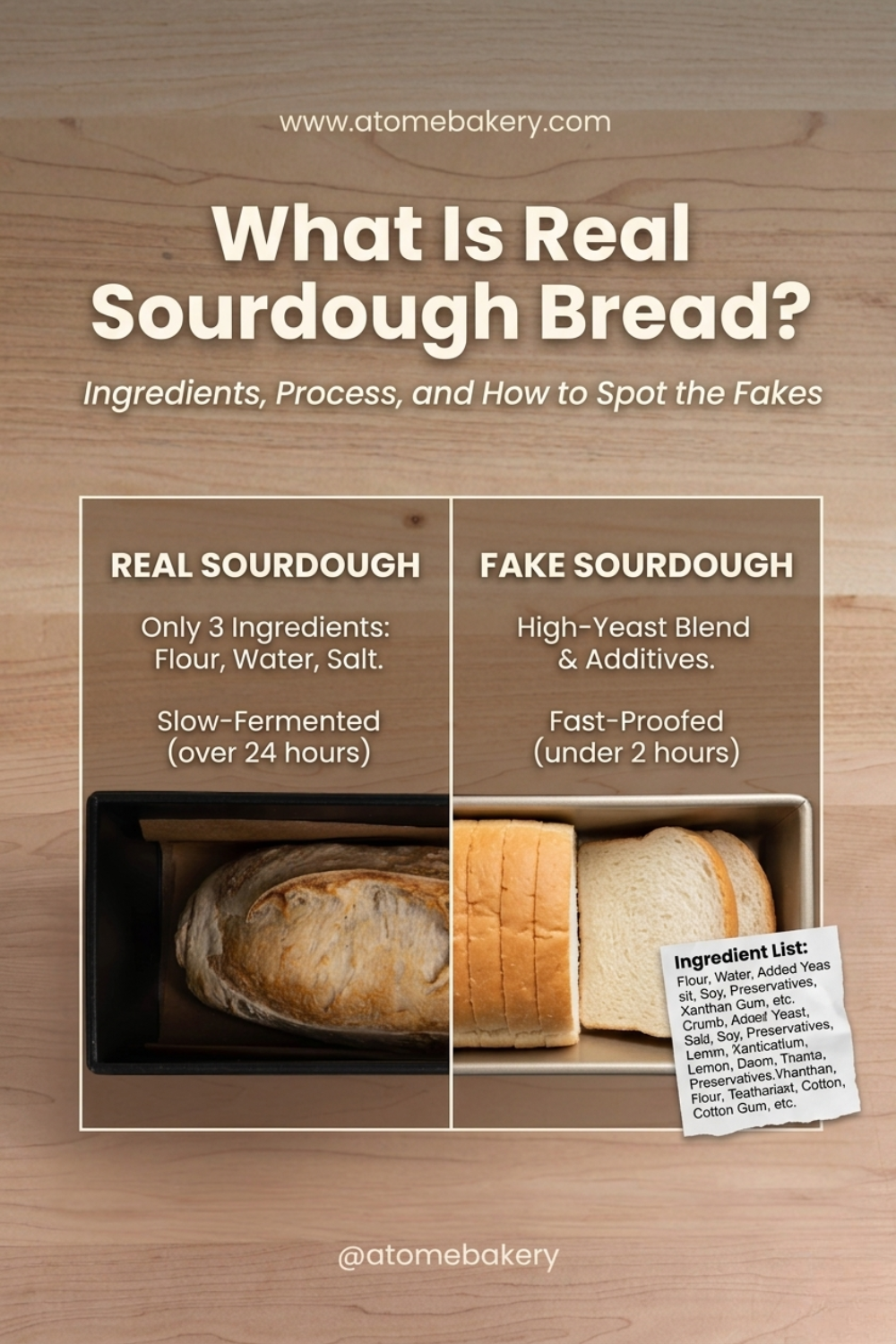
Pick up a loaf labelled "sourdough" at most grocery stores in Canada and flip it over. Read the ingredients. You'll probably find yeast, sugar, preservatives, and a handful of additives that have no business being anywhere near actual sourdough. That loaf might look the part — maybe it even has a dusting of flour on top for good measure — but it's not sourdough. Not really.
Real sourdough bread is one of the oldest foods humans still eat, and its ingredient list is almost comically short: flour, water, salt, and a live sourdough starter (which itself is just flour and water, fermented over time). That's it. No commercial yeast. No sugar. No dough conditioners. The flavour, the texture, and the long shelf life all come from a slow, natural fermentation process that can't be rushed or faked.
The Only Ingredients You Actually Need
A genuine sourdough bread contains flour, water, salt, and a sourdough starter — also called a levain or a mother dough. The starter is a culture of wild yeast and lactic acid bacteria that's been cultivated and fed over days, weeks, or even years. When mixed into dough, this starter does the heavy lifting: it produces carbon dioxide (which makes the bread rise), organic acids (which give sourdough its tangy flavour), and enzymes that break down gluten and phytic acid.
Flour matters too. Most artisan sourdough uses strong bread flour with a protein content above 12%, though many bakers blend in whole wheat, rye, or spelt for complexity. The type of flour affects the crumb, the crust, and the fermentation speed. Water quality plays a role as well — heavily chlorinated tap water can inhibit the wild yeast. And salt isn't just for flavour; it tightens the gluten network and controls fermentation speed so the dough doesn't over-proof.
That's your entire shopping list. If a label includes anything beyond these four core components, it's not traditional sourdough. It might still be decent bread, but it's a different product.
Why Fermentation Is the Whole Point
The thing that separates sourdough from every other bread is time. A standard commercial loaf can go from mixing to bagging in under three hours. Real sourdough takes anywhere from 12 to 48 hours, depending on the baker's method and the ambient temperature.
During that long fermentation, the wild yeast and bacteria in the starter break down complex starches and proteins in the flour. This does several things at once. It develops flavour compounds you simply can't get from a quick rise — the mild tang, the subtle sweetness, the depth that makes good sourdough taste like something you want to keep eating. It also pre-digests some of the gluten, which is why many people who feel bloated after eating regular bread find sourdough easier on their stomach. And it reduces phytic acid, which means your body can absorb more of the minerals in the flour — iron, zinc, magnesium.
You can't shortcut this. Some industrial bakeries add vinegar or citric acid to white bread to mimic the sour taste, then label it sourdough. The flavour is one-dimensional, and you get none of the digestive or nutritional benefits of real fermentation. It's like putting smoke flavouring on chicken and calling it barbecue.
How to Spot Fake Sourdough at the Store
Grocery store bread aisles have gotten sneaky. "Sourdough" has become a marketing term more than a production standard, because in Canada (and most countries), there's no legal definition protecting it. Any bread can be called sourdough. Here's how to tell what you're actually buying.
First, read the ingredient list. If you see "yeast" or "baker's yeast" listed, it's not a naturally leavened sourdough. Some bakeries use a hybrid approach — a bit of sourdough starter plus commercial yeast to speed things up — and while that's not the worst thing in the world, it's not the real deal either. If you see sugar, soybean oil, calcium propionate, or mono- and diglycerides, you're looking at a standard industrial loaf in sourdough clothing.
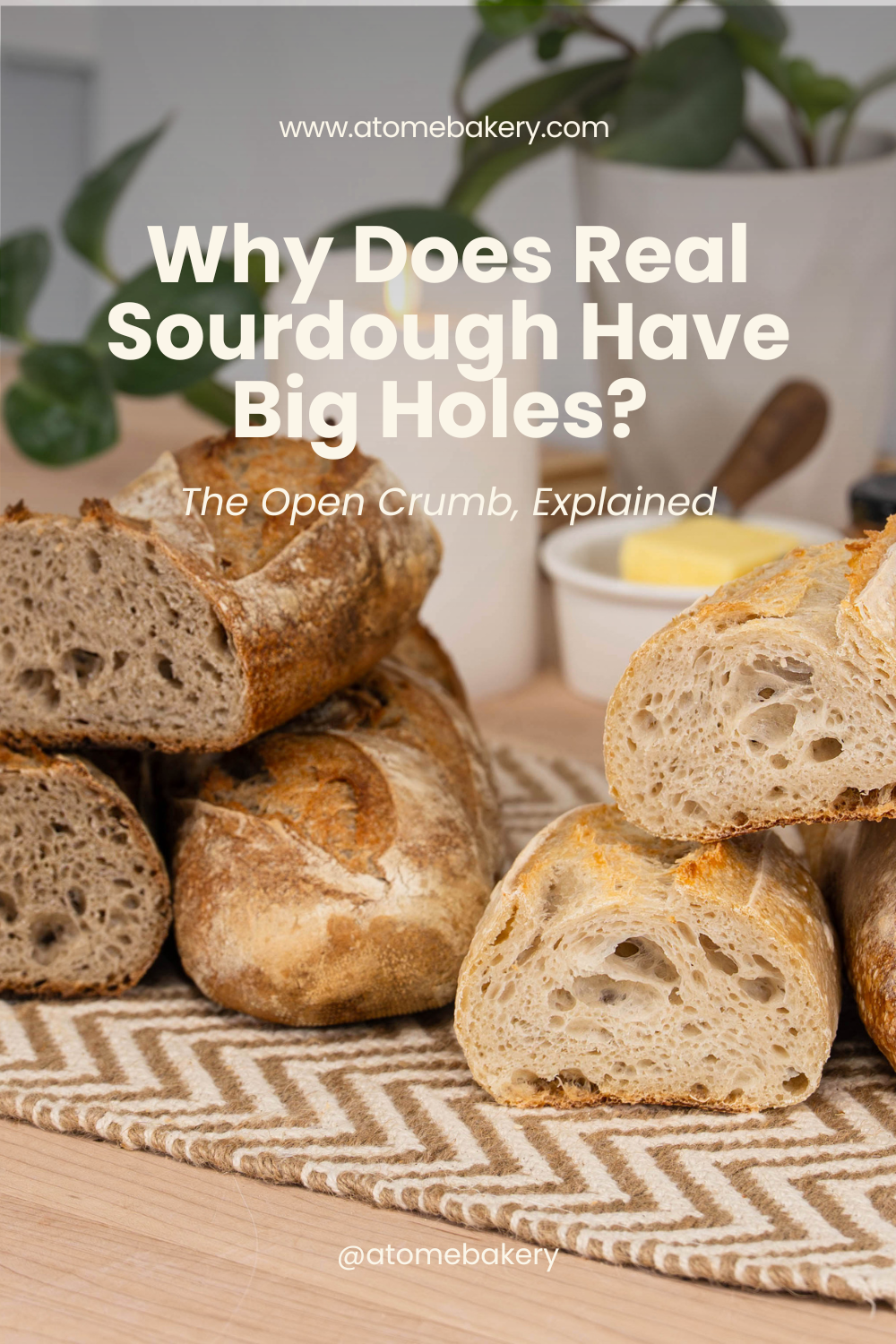
Second, check the texture. Real sourdough has an irregular crumb — the holes inside are different sizes, some large, some small. Mass-produced bread has a uniform, even crumb because it rises quickly and predictably with commercial yeast. If every slice looks identical, that's a tell.
Third, notice the shelf life. A plastic-wrapped loaf that stays soft for two weeks is packed with preservatives. Real sourdough lasts remarkably well — several days on the counter, a week or more if stored properly — but it doesn't stay pillow-soft forever. The crust firms up. That's normal and actually a sign of quality.
The Sourdough Starter: A Living Thing
Every sourdough starter is unique. It's a living ecosystem of wild yeast and bacteria that reflects the flour it's been fed, the water it's been mixed with, and even the environment of the kitchen where it lives. Bakers often name their starters. Some have been maintained for decades, passed between generations.
Maintaining a starter takes discipline. It needs to be fed regularly — typically once a day if it's kept at room temperature, or once a week if refrigerated. Each feeding involves discarding a portion and adding fresh flour and water. Skip too many feedings and the bacteria overwhelm the yeast, producing off flavours. Neglect it long enough and it dies.
This is one reason artisan sourdough costs more than supermarket bread. The starter requires daily attention. The dough requires long fermentation times that tie up equipment and workspace. There's no way to scale this the way you scale a factory bread line without losing what makes it special. Some bakeries manage to produce real sourdough at volume — it's possible with careful process design — but it requires genuine expertise and infrastructure that most industrial operations aren't set up for.
What About Sourdough Discard Recipes?
If you follow any baking accounts online, you've probably seen the sourdough discard trend — pancakes, waffles, pizza dough, crackers, even chocolate cake made with the portion of starter that bakers throw away during feeding. These recipes are genuinely useful. The discard adds a mild tang and helps with texture, and it means less waste.
But here's an important distinction: sourdough discard recipes aren't the same as sourdough bread. Most discard recipes also include baking powder, baking soda, or commercial yeast as the primary leavening agent. The discard is there for flavour and texture, not for fermentation. They're tasty, they're practical, but they don't give you the same nutritional benefits or complex flavour profile of a properly fermented sourdough loaf.
Why More Canadians Are Seeking Out the Real Thing
There's been a noticeable shift in how Canadians think about bread. The pandemic sourdough boom in 2020 introduced millions of people to the basics of fermentation, and many of them never went back to sliced white. But maintaining a starter and baking from scratch every week is a commitment that most people can't sustain alongside jobs, kids, and everything else.
That's created a growing demand for real sourdough that's convenient — bread that's been made properly, with a live starter and long fermentation, but doesn't require you to spend your Saturday covered in flour. Frozen sourdough has emerged as one answer to this. When bread is fully baked and then flash-frozen, it locks in the flavour, texture, and nutritional profile at peak quality. You bake it from frozen when you want it, and it comes out tasting like it just left the oven.
Atome Bakery built its entire model around this idea. Every loaf is made with a live sourdough starter, undergoes a full long fermentation, gets fully baked, and is then frozen and shipped across Canada. There's no parbaking, no shortcuts, no added yeast. When you bake an Atome loaf at home — about 30 minutes from frozen — you're getting genuine artisan sourdough with a crackling crust and an open crumb, without needing to maintain a starter or clear your weekend schedule.
For anyone who's been buying "sourdough" from the grocery store and wondering why it tastes like regular bread with a slightly sour aftertaste, this is why. The real thing is a different experience entirely.
Frequently Asked Questions
Is sourdough bread actually healthier than regular bread?
Yes, when it's made with genuine long fermentation. The process reduces phytic acid (which improves mineral absorption), partially breaks down gluten (making it easier to digest for many people), and produces beneficial organic acids. Industrial bread labelled "sourdough" that uses commercial yeast and a quick rise doesn't provide these benefits.
Can people with gluten intolerance eat sourdough?
Sourdough is not gluten-free. However, the long fermentation does reduce the gluten content compared to conventionally yeasted bread. Some people with mild gluten sensitivity report that they tolerate real sourdough better. If you have celiac disease, sourdough made with wheat flour is not safe.
Why does sourdough bread taste sour?
The tang comes from lactic acid and acetic acid produced by bacteria during fermentation. The sourness level depends on fermentation time, temperature, hydration, and the specific bacteria in the starter. A warmer, shorter ferment tends to produce a milder flavour; a cooler, longer ferment creates more acidity.
How can I tell if bread at a bakery is real sourdough?
Ask the baker directly: "Do you use commercial yeast, or only a sourdough starter?" A real sourdough baker will be happy to talk about their process. If they can't answer clearly, or if the bread is suspiciously cheap and uniform, it's likely a hybrid or conventional loaf with sourdough flavouring.
Does freezing sourdough bread ruin it?
Not at all. Freezing fully baked sourdough preserves the crumb structure, flavour, and crust quality extremely well. The key is that the bread must be fully baked before freezing — not parbaked, which results in a different (and inferior) texture when finished at home. Flash-freezing right after baking locks everything in at peak freshness.

Leave a comment
This site is protected by hCaptcha and the hCaptcha Privacy Policy and Terms of Service apply.